介词
介词用在名词、代词或动名词前,表示它们与句中其他成分的关系。
用法总览
横向看一个介词的各种用途,纵向比较同一用途下的不同介词。
| 介词 | 时间 | 地点 | 方位 | 方式 | 活动、事件 | 交通工具 |
|---|---|---|---|---|---|---|
| at | 具体的时刻、节日,如 at 7 o'clock、at night、at the weekend、at Christmas(整个节日期间) | 某个具体的位置(点),如 at the bus stop | 表示某人参加某个活动或事件,如 at a party | |||
| on | 具体的某一天、日期,如 on Monday、on Christmas Day(节日当天) | 在表面上,如楼层 on the second floor | 两地接壤,如 on the north of China | 电子产品,如 on the TV / radio / internet / screen | bus, train, plane, ship,并与 get on/off 搭配 | |
| in | 1. 一段时间,如年、月、季节、in the morning / afternoon / evening 2. 后跟一段时间,表示在多久之后,用于将来时 |
大地点,如城市、国家 in Beijing | 在某范围内部,如 in the north of China | 1. 使用某种语言 2. in bed |
car, taxi,并与 get in / get out of 搭配 | |
| to | 两地不接壤,有间隔,如 to the east of China | |||||
| by | 不晚于某个时间,如 by Friday | 以什么方式乘坐交通工具,如 by bus | ||||
| after | 后跟具体的时刻或从句,表示在什么时刻之后,用一般时态,如 after school | |||||
| since | 后跟具体时刻或从句,表示自从什么时候起一直到现在,常与现在完成时连用,如 since 2020 | |||||
| for | 后跟一段时间,表示总共有多长之久,如 for two hours | |||||
| with | 使用某种工具或方法,如 with a pen |
表示方位时,in、on、to 的区别:
| 表达 | 含义 | 示例 |
|---|---|---|
| in the east of | 在某范围 内部 的东部 | Shanghai is in the east of China. |
| on the east of | 在外部,与之 接壤 | Mongolia is on the north of China. |
| to the east of | 在外部,不接壤 | Japan is to the east of China. |
on the east of 的说法主要见于国内教材,英语母语者实际上多用 to the east of 同时表示接壤和不接壤两种情况。
时间短语中含有 last、next、this、every 时,不用介词:I saw him last week.(不说 in last week)
方位与空间
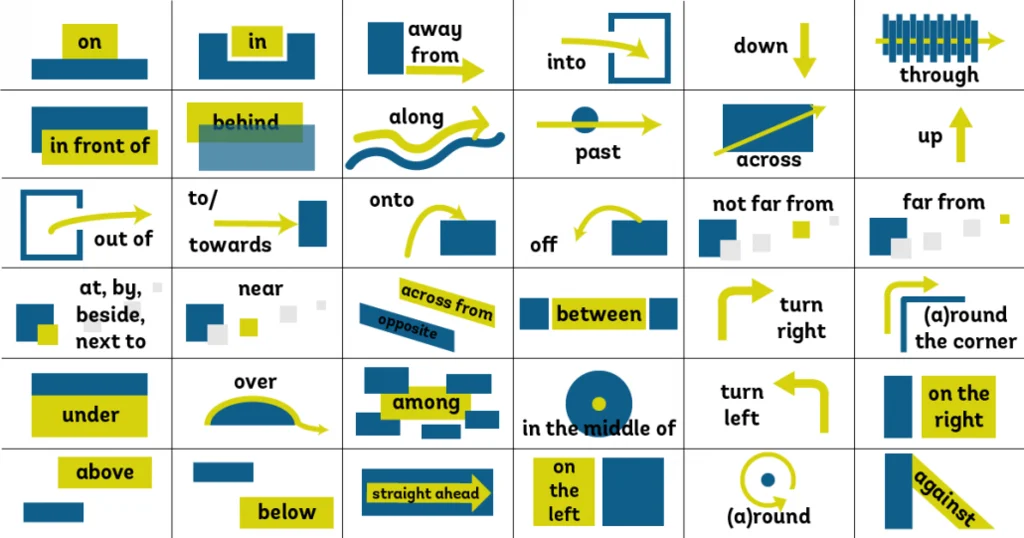
| 介词 | 含义 | 示例 |
|---|---|---|
| in | 在……里面 | There are some birds in the tree. |
| on | 在……上面(紧贴表面) | There are some apples on the tree. |
| at | 在某处(具体的位置) | at the corner of the street |
| over | 1. 覆盖 2. 在……正上方 3. 越过上空 |
The mother put a blanket over the child. the bridge over the river The plane flew over the mountain. |
| above | 在……上面(不接触,不一定是正上方) | the sky above us |
| under | 在……正下方,或接触、被覆盖 | under the table |
| below | 在……下方(above 的反义词,不一定是正下方);也用于温度 | below zero |
| beneath | 在……之下,多用于抽象概念,如能力、地位低于期望 | beneath contempt |
| near | 在……附近 | near the station |
| by / beside | 在……旁边 | by the window |
| next to | 紧挨着 | next to me |
| across | 从表面横穿,从一边到另一边,如马路、河流、围墙 | go across the street, swim across the river |
| through | 从内部穿过,如公园、大厦、森林、人群、门 | go through the tunnel, walk through the forest |
| past | 经过,路过 | walk past the shop |
| among | 在三者或更多之间 | among the students |
| along | 沿着,顺着 | walk along the river |
| off | 离开(某表面);离……有一定距离 | get off the bus |
- over 与 above 相比,可以描述动态的“上方”,如飞过。
- in 表示在……里面(静态),into 表示进入……里面(动态)。
- 成对的介词:on / over ↔ under、above ↔ below、into ↔ out of、onto ↔ off、up ↔ down。
- in front of 表示在某物范围外的前面,in the front of 表示在某物范围内的前面。
其他易混介词
| 介词 | 区别 |
|---|---|
| on time / in time | on time 表示准时;in time 表示及时 |
| for | 表原因:因为……,由于……,如 Thank you for your help. |
常用介词详解
at
- 具体的时间:at 6am、at midnight / dawn / sunrise / sunset、at the beginning / end of the meeting、at the same time、at the age of ten
- 具体的地点:at the office、at the village、at the airport
- at 后接所有格,表示某人的住处或某个店铺:at his uncle's(在他叔叔家)、at the grocer's(在食品杂货店)
- 无法按面积或空间划分范围的位置:at the bus stop、at the door、at the window、at the foot of the hill
- 会议、宴会、婚礼等场合:at the meeting、at the wedding、at the press conference
- 价格、速度、距离等数值:at a high price、at 60 km/h、at a distance、at sea level
- 与动词连用,表示动作的目标:
- 看:look at、glance at、stare at
- 瞄准、攻击:aim at、point at、fire at、shoot at、rush at、jump at、fly at、throw questions at sb.
- 言语:laugh at、shout at、get at sb.(指责某人)、talk at sb.(指桑骂槐)
- 敲打、拉拽:knock at the door、pull at the rope
- 评估:estimate / rate / value … at …(把……估计/评价为……)、guess at(猜测)
- 抓住:grasp at、catch at a chance
- 钻研、理解:work at(下功夫)、get at the meaning(理解意思)
- 表示心情:be shocked / disappointed / surprised / glad / pleased / delighted / sad / angry at …
- 与形容词最高级连用(可省略 the),表示极限:at (the) most / least、at best / worst、at earliest / latest
- 固定短语,需结合上下文理解:at large(逍遥法外;总的来说)、at length(最终;详细地)、at heart(内心里,实际上)、be good / bad at(擅长 / 不擅长)、at any cost(不惜任何代价)
on
- 在……上、在某人身上、朝向……
- have … on sb.:让某人(通常是执法部门或权力机构)去对付某人,如 If you show up again, I will have the police on you.
- on me:我请客,如 Have another cup of coffee on me.
- 与动词连用,表示上车、上船、上台、上场、上演;乘坐私人汽车则用 get in / into
- 与动词连用,表示集中在……上,如 focus on
- 与线状的名词连用,表示相邻、接壤,如 a town on the river
- 与具体某一天连用,如 on Monday
upon 的用法与 on 相同,但比 on 正式,多用于正式文体中。
in
- 地点、空间、范围、方位
- 涉及人体部位时:表面多用 on,打击较软或中空的部位用 in,如 hit him in the stomach
- 疼痛和创伤所在的部位,通常用 in,如 a pain in the back
- 一段时间,如年、月、季节、in the morning、in the 1980s
- 衣着、特征、性质、情绪、心境、从事的职业等,如 in red、in a hurry
to
- 到、朝向
- 达到某数字、金额、温度等
by
- 在……旁
- 通过、经由、取道
- 表示截止时间,不晚于……
- 在被动语态中引出动作的执行者